You already know the concept. You have sat with it, worked on it, tried to shift it. Perhaps with a coach. Perhaps in a seminar. Perhaps alone at the kitchen table at 11 pm, asking yourself why the pattern keeps returning.
The concept of the money block is not wrong. It names something real — something measurable, in fact. The financial domain sits outside the self-referential territory of your medial prefrontal cortex. Your ventral striatum does not register financial gains as approach-relevant rewards. These are not metaphors. These are functional states, documented in peer-reviewed neuroimaging research across seven longitudinal cohorts.
The problem is not the diagnosis. The problem is the treatment.
Hebb's Law makes this painfully clear.
Donald Hebb, 1949: "Neurons that fire together wire together."
When you identify a money block and work against it — when you confront the limiting belief, dispute it, reframe it, tap it, journal around it — you are activating the neural circuit you are trying to change.
The brain does not process "I am fighting this." It processes activation. And activation builds connection. Repeated activation builds stronger connection. The more frequently you engage in conflict with the pattern, the more consolidated that pattern becomes.
This is why the work feels exhausting. This is why the pattern returns the week after the seminar. This is not a failure of commitment. This is neuroscience, and once you understand it, the exhaustion makes complete sense.
You were not weak. You were working with the wrong mechanism.
Now here is what changes in milliseconds.
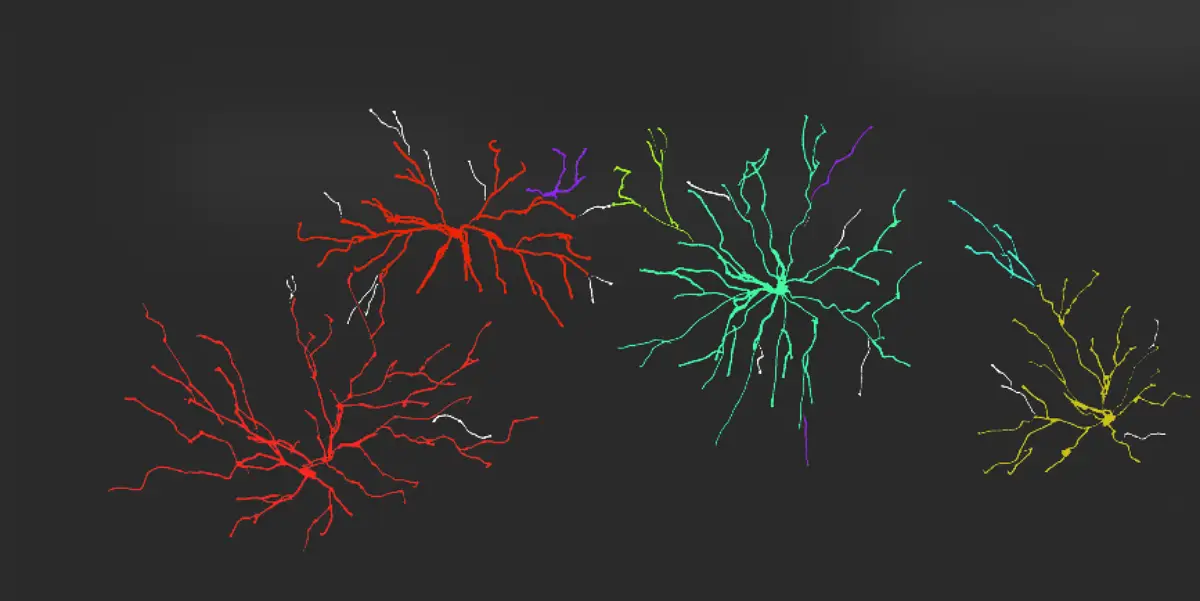
A neuron fires. A synapse responds. When the financial domain is engaged from a state of genuine approach — from curiosity, from self-trust, from the specific brain-state in which the mPFC and the ventral striatum begin to co-activate — a new pathway starts forming.
Not through conflict. Through co-activation.
It takes milliseconds for a neuron to fire. It takes consistent repetition for that firing to become a stable pathway. And it builds faster than most people expect — because your brain is not starting from zero. The capacity is there. The circuitry exists. What is missing is the co-activation pattern in the right domain, in the right state. That is a construction task. Not a healing task. Not an overcoming task. A construction task — and you can begin it now.
Self-trust is the substrate.
The approach state cannot be forced. It cannot be manufactured through discipline or through the sheer willpower to think more positively about money. It requires something foundational that most wealth-building advice never addresses: safety in the financial domain. And safety requires a working trust in your own capacity to navigate it.
This is why capable people — people who function with precision and reliability in their professional domain, who others trust with serious decisions — find themselves paralysed in the financial one. The professional domain is wired. The self-trust is built and tested. The financial domain is wired differently. The self-trust is absent. Not because the capacity is absent. Because the co-activation history is absent.
The six-step construction protocol in this book begins here. Not with the portfolio. Not with the savings plan. With the approach state that makes the mPFC-VS coupling possible — and with the self-trust that makes the approach state accessible.
The signal you are building toward.
When the coupling becomes functional — when the mPFC includes the financial domain in its self-referential territory, and the ventral striatum begins to register financial engagement as approach-relevant — you feel something specific.
Not the manufactured optimism of an affirmation. Not the hollow relief of a reframe that held for three days. The clean, grounded signal of a brain that has found its function in a domain it previously avoided.
A specific, measurable form of joy of life — produced by a brain doing what it was built to do, in a domain it previously treated as foreign territory.
That signal is not a reward at the end of the process. It is a marker of the process working. It appears during the construction — neuron by neuron, co-activation by co-activation — and it intensifies as the coupling strengthens.
This is salutogenesis in practice. Not the elimination of what does not serve you. The systematic construction of what does.
The evidence base
Peer-reviewed sources, each rated for evidence strength
Assembly Steps with measurable completion criteria
Mechanism — documented, testable, constructible in adulthood
The mechanism is documented. The protocol is complete. The question is not whether the coupling is constructible. The evidence says it is.
The question is when you begin.
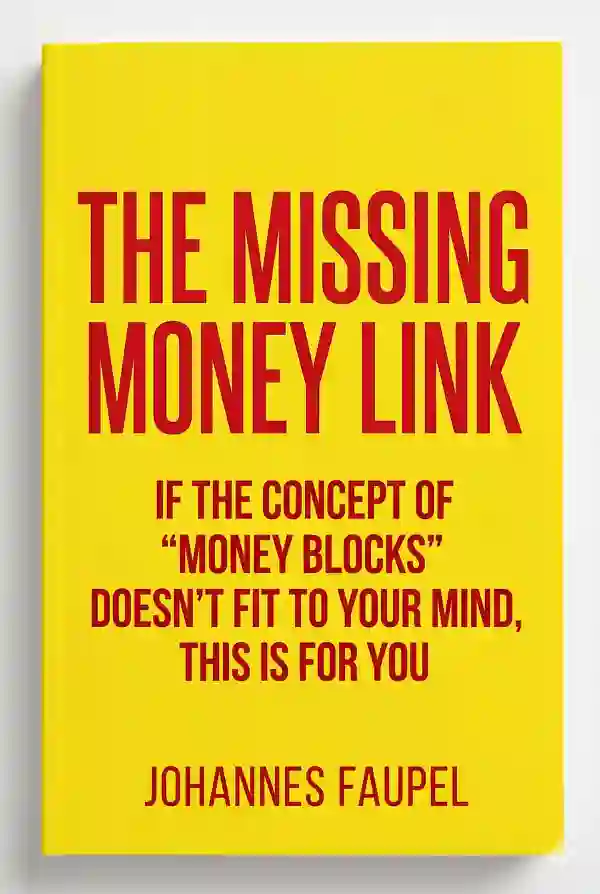
Pre-sale price: $27 — until June 27, 2026, at midnight. The e-book ships June 27. The construction starts the moment you open it.
Order now — $27 →
Secure checkout via Stripe · PDF & ePub · All future updates included